Altilium welcomes the establishment of the UK-Germany Critical Minerals Policy Exchange, an important step forward in strengthening Europe’s economic resilience and securing the critical raw materials needed for the energy transition.
As recognised in a joint statement by UK Secretary of State for Business and Trade Peter Kyle and German Minister for Economic Affairs and Energy Katherina Reiche, secure and sustainable access to critical raw materials is essential for the advancement of clean energy, advanced manufacturing and future technologies across Europe.
With the signing of the new Critical Minerals partnership, both governments have committed to closer collaboration with business, creating the right conditions for growth while ensuring secure supplies of the materials modern industries depend on.
Peter Kyle, Secretary of State, DBT, commented: “Critical minerals sit at the heart of the UK’s Industrial Strategy, so we’re working with Germany to unlock opportunities in key sectors and make our supply chains future-ready.”
Altilium is proud that our partnership with chemicals company HELM AG was highlighted as a practical example of UK-German collaboration helping to strengthen sustainable critical minerals supply chains.
Building on an MOU signed in 2025, the collaboration recently reached a key milestone with the first shipment of lithium sulphate recovered from end-of-life EV batteries at Altilium’s ACT2 facility in Plymouth to LevertonHELM for qualification. This marks an important step toward establishing a circular lithium supply chain between the UK and Europe.
By combining Altilium’s proprietary recycling capabilities with HELM’s lithium processing and refining expertise, the partnership aims to reduce reliance on imported raw materials, strengthen regional supply chain resilience and support compliance with emerging EU battery regulations on recycled content.
Lithium is a critical component in EV batteries and is included in the list of 34 Critical Raw Materials identified by the EU as being crucial for the European economy. According to the UK Government’s Critical Minerals Strategy, demand for lithium is set increase by 1,100% in the UK alone by 2035.
By 2031, batteries sold in the EU must contain at least 6% recycled lithium, increasing to 12% by 2036.
Altilium’s new ACT3 recycling facility in Plymouth will recover approximately 1,000 tonnes per year of lithium (LCE) from end-of-life EV battery waste.
Read the full joint statement here: www.gov.uk/government/publications/uk-germany-joint-statement-on-critical-minerals/joint-statement-of-the-department-for-business-and-trade-of-the-uk-and-the-federal-ministry-for-economic-affairs-and-energy-of-germany-co-operation-o
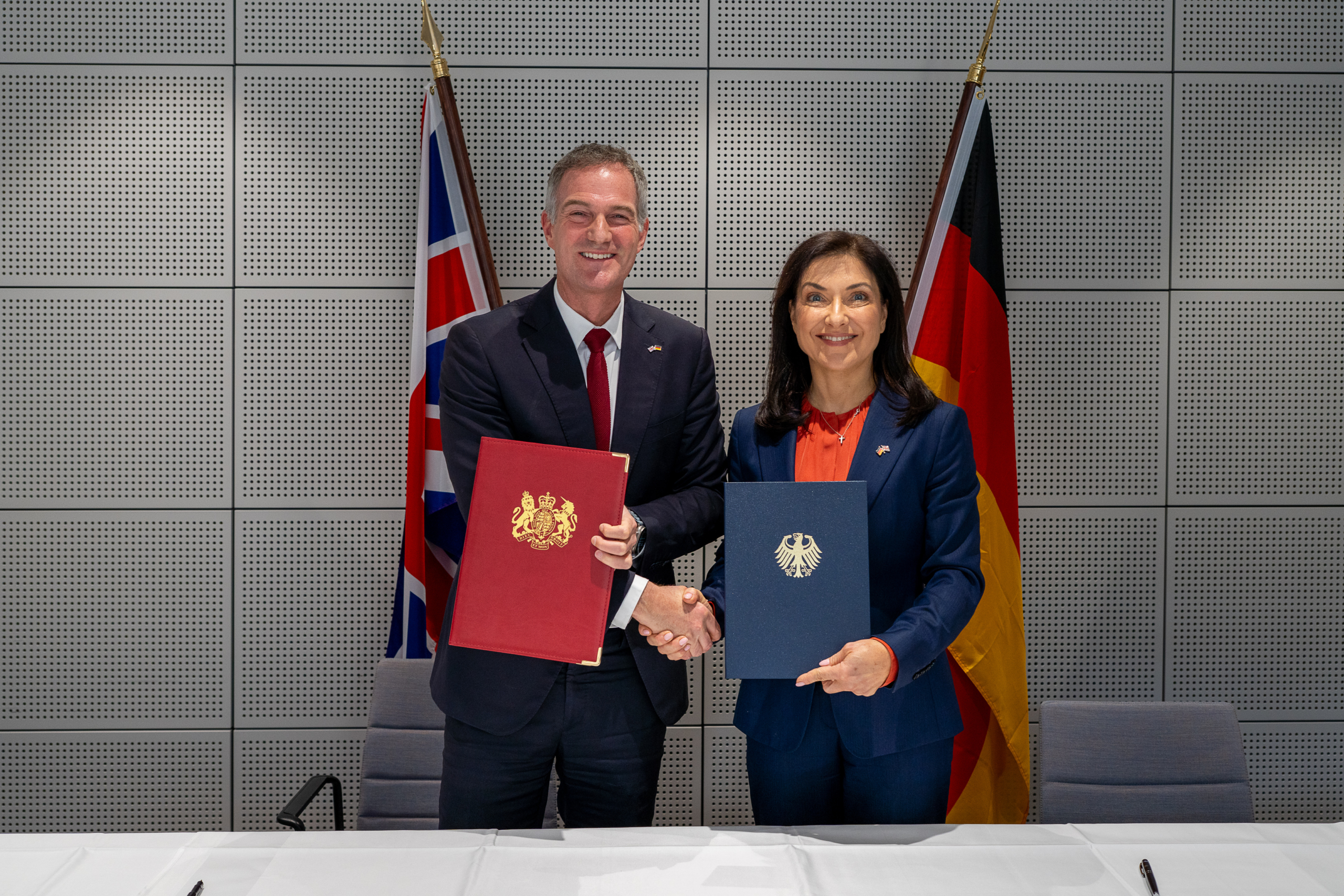
Photo: Fabio Youniss / DBT
Get in touch
Building the recycling infrastructure needed for net-zero requires a collaborative approach.