
9th April, 2026 – Altilium, a UK-based clean technology group focused on sustainable recovery of critical battery minerals, today announced that it has secured grant funding through the UK government’s DRIVE35 programme for an innovative new collaborative R&D project with luxury car manufacturer JLR and Warwick Manufacturing Group (WMG), a world leading research and education department, at the University of Warwick.
In a UK first, the project will see the partners produce and test EV battery pouch cells containing both cathode and anode materials recovered from end-of-life EV batteries, marking an important step towards establishing a fully circular EV battery supply chain in the UK.
Together, these advances will demonstrate that end-of-life EV batteries can be processed to recover high-value materials for integration into next-generation battery production, reducing reliance on imported materials and cutting carbon emissions.
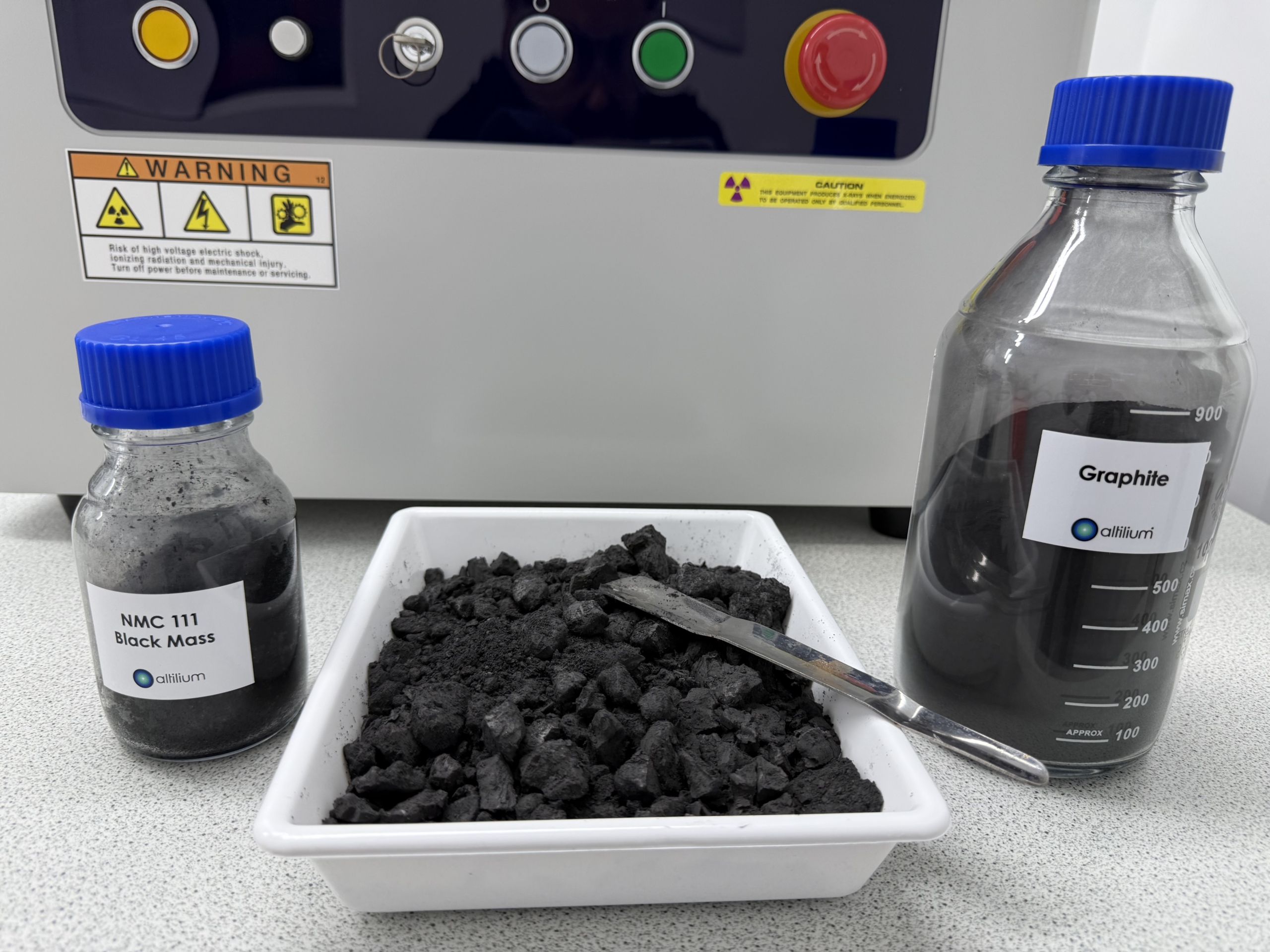
Recovery of cathode and anode materials will take place at Altilium’s ACT2 pilot facility in Plymouth, using the company’s proprietary EcoCathode and EcoAnde processes. Altilium’s advanced hydrometallurgical process can recover 95% of the cathode metals and 99% of the graphite from end-of-life EV batteries and production scrap.
Recovered materials will then be used to manufacture electrodes on WMG’s Advanced Materials Battery Industrialisation Centre (AMBIC) prototyping line, which can process kgs of battery materials under industrially representative electrode designs and processing conditions. From these electrodes, WMG will manufacture and test NMC 811 pouch cells containing 100% recycled anode materials and cathode active materials (CAM) containing recycled cathode metals that meet the EU’s minimum recycled content targets for 2036 (26% cobalt, 12% lithium and 15% nickel).
WMG will also produce and test electrodes and cells using second-generation recycled cathode and anode materials (recovered by Altilium from EV batteries containing previously recycled materials), thus establishing a fully circular supply chain.
JLR will provide strategic oversight throughout the programme, reviewing cell performance and material testing results to assess suitability for future automotive applications.
In addition, sustainability consulting and advisory group Minviro will carry out a comprehensive lifecycle analysis (LCA) of the anode recovery and battery cell production, quantifying the carbon savings and environmental benefits.
The project builds on previous collaboration between the three partners (under the APC’s ARMD3 competition) on understanding the impact of incorporating recycled CAM into new battery cells, and the subsequent carbon saving benefits. Electrochemical testing of these cells demonstrated comparable performance with commercial materials and a 32% reduction in greenhouse gas emissions compared to cells using virgin materials mined and refined in Asia.
Expanding the scope to include anode materials positions Altilium as the UK’s only company capable of recovering both anode and cathode materials at pilot scale, creating a first-of-its-kind domestic capability.
Dr Christian Marston, COO and co-founder of Altilium, commented: “We are proud to be continuing our partnership with JLR and WMG, which builds on the success of our APC ARMD3 collaboration, where we demonstrated the UK’s first EV battery cells produced using recycled cathode active materials. With the inclusion of recycled graphite in this new project, the UK will now have a viable route to produce both cathode and anode materials domestically, an essential step for car manufacturers seeking supply chain resilience and sustainable battery materials.”
Graphite is the single largest material in an EV battery, comprising up to 50% of a battery by volume, while CAM is the most valuable component, accounting for 37% of cell cost. The current supply chain for cathode and anode materials is dominated by China, leaving the UK vulnerable to disruption and cost volatility.
According to the APC, the UK automotive industry will need 140,000 tonnes a year of CAM and 90,000 tonnes of anode materials to achieve its production target of 1.3 million EVs by 2035.
By securing domestic supply of these critical materials through recycling of spent batteries, Altilium is supporting new domestic manufacturing capabilities, reducing reliance on imported raw materials and helping British car manufacturers to comply with EU Battery Regulations and Rules of Origin requirements for tariff-free trade.
Delivered by the Department for Business and Trade in partnership with the Advanced Propulsion Centre UK (APC) and Innovate UK, the DRIVE35 programme is part of the UK Government’s Advanced Manufacturing Sector Plan, which outlines its commitment to a zero-emission future, with an unprecedented £4 billion of grant funding available to 2035 for automotive R&D, scale-up, and transformation.
About Altilium
Altilium is a UK-based clean tech group that is reshaping the UK and European automotive supply chain by offering high volume, low carbon domestic sources of cathode and anode materials from recycling waste streams already in circulation, such as end-of-life batteries.
The company’s proprietary EcoCathode™ process converts end-of-life EV batteries and manufacturing scrap into domestic, sustainable, battery precursors, cathode active materials (CAM) and cathode precursor (pCAM) for direct reuse in new batteries.
Altilium’s first pilot plant commenced operations in Plymouth in 2025 while its planned Teesside plant will be one of the largest EV battery recycling facilities in Europe. The plant will have the capacity to process scrap from over 150,000 EVs per year, producing 30,000 MT of CAM, enough to meet around 20% of the UK’s expected needs by 2030.
The company is backed by SQM Lithium Ventures, the corporate venture arm of the lithium business of Sociedad Quimica y Minera de Chile (SQM), Japanese trading and investment group Marubeni Corporation and Mizuho Bank.
For more information go to www.altilium.tech
For media inquiries contact Dominic Schreiber, head of communications:
About Warwick Manufacturing Group (WMG)
WMG is a world leading research and education group, transforming organisations and driving innovation through a unique combination of collaborative research and development, and pioneering education programmes.
As an international role model for successful partnerships between academia and the private and public sectors, WMG develops advancements nationally and globally, in applied science, technology and engineering, to deliver real impact to economic growth, society and the environment.
WMG’s education programmes focus on lifelong learning of the brightest talent, from the WMG Academies for Young Engineers, degree apprenticeships, undergraduate and postgraduate, through to professional programmes.
An academic department of the University of Warwick, and a centre for the HVM Catapult, WMG was founded by the late Professor Lord Kumar Bhattacharyya in 1980 to help reinvigorate UK manufacturing and improve competitiveness through innovation and skills development.
For more information go to https://warwick.ac.uk/fac/sci/wmg/
Get in touch
Building the recycling infrastructure needed for net-zero requires a collaborative approach.