
Altilium is proud to be partnering with Imperial College London on a new R&D project focused on recovery and validation of anode active material from end-of-life EV batteries using its EcoAnode™ process.
The collaboration aims to validate the quality of recycled graphite for reintroduction into EV battery manufacturing, supporting the development of a circular economy for critical battery materials in the UK.
Under the project, Imperial will carry out advanced characterisation of graphite materials recovered from battery waste at Altilium’s ACT2 pilot plant in Plymouth.
The work is being led by Dr Nuria Tapia Ruiz, Associate Professor in Energy Materials at Imperial’s Faculty of Natural Sciences, and is funded through Imperial’s SME Engagement Fund, which supports collaborative research projects with SMEs.
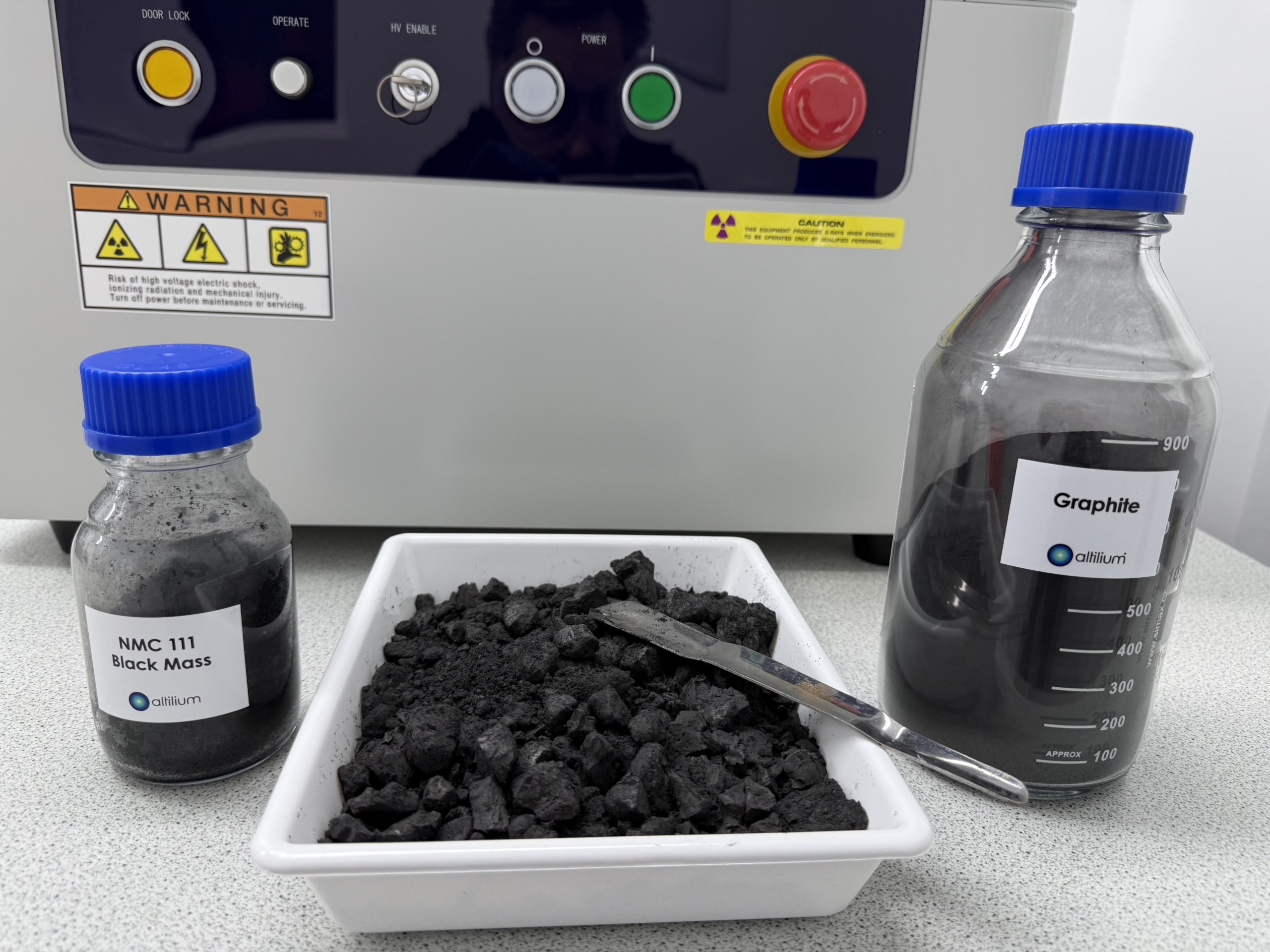
Altilium’s advanced hydrometallurgical process can recover 99% of graphite from end-of life EV batteries. Testing of the recycled graphite has already shown a good match to primary graphite in areas of purity and physio-chemical characteristics.
Graphite is a critical component of lithium-ion batteries, comprising up to 50% of a battery by volume. With over 90% of the world’s graphite anode material produced in China, securing alternative and sustainable sources is a strategic priority for the UK and Europe.
By recovering high-value anode materials alongside cathode metals, Altilium is expanding its customer offering to cover the full spectrum of valuable materials in spent batteries, creating a first-of-its-kind domestic capability in the UK.
Get in touch
Building the recycling infrastructure needed for net-zero requires a collaborative approach.